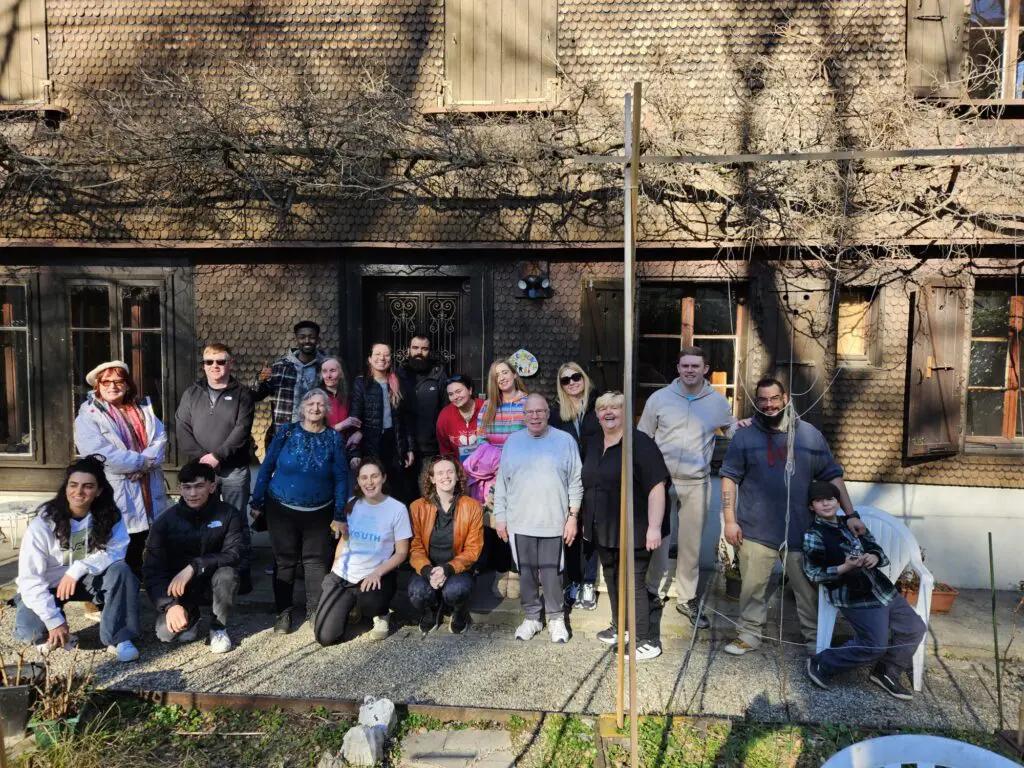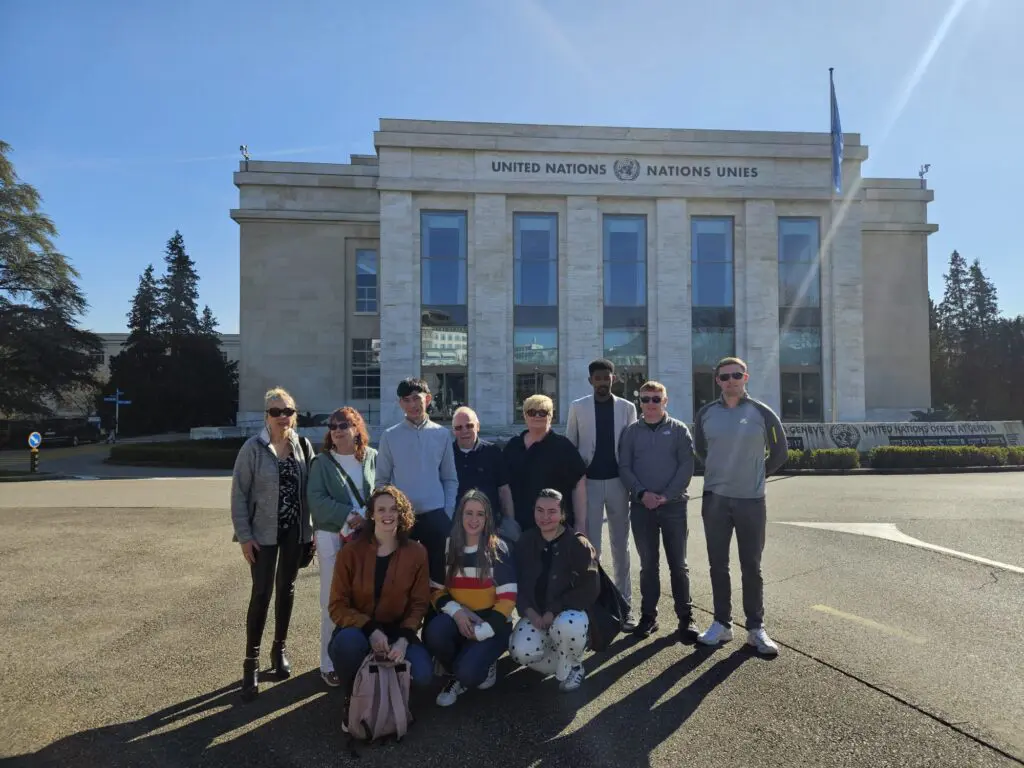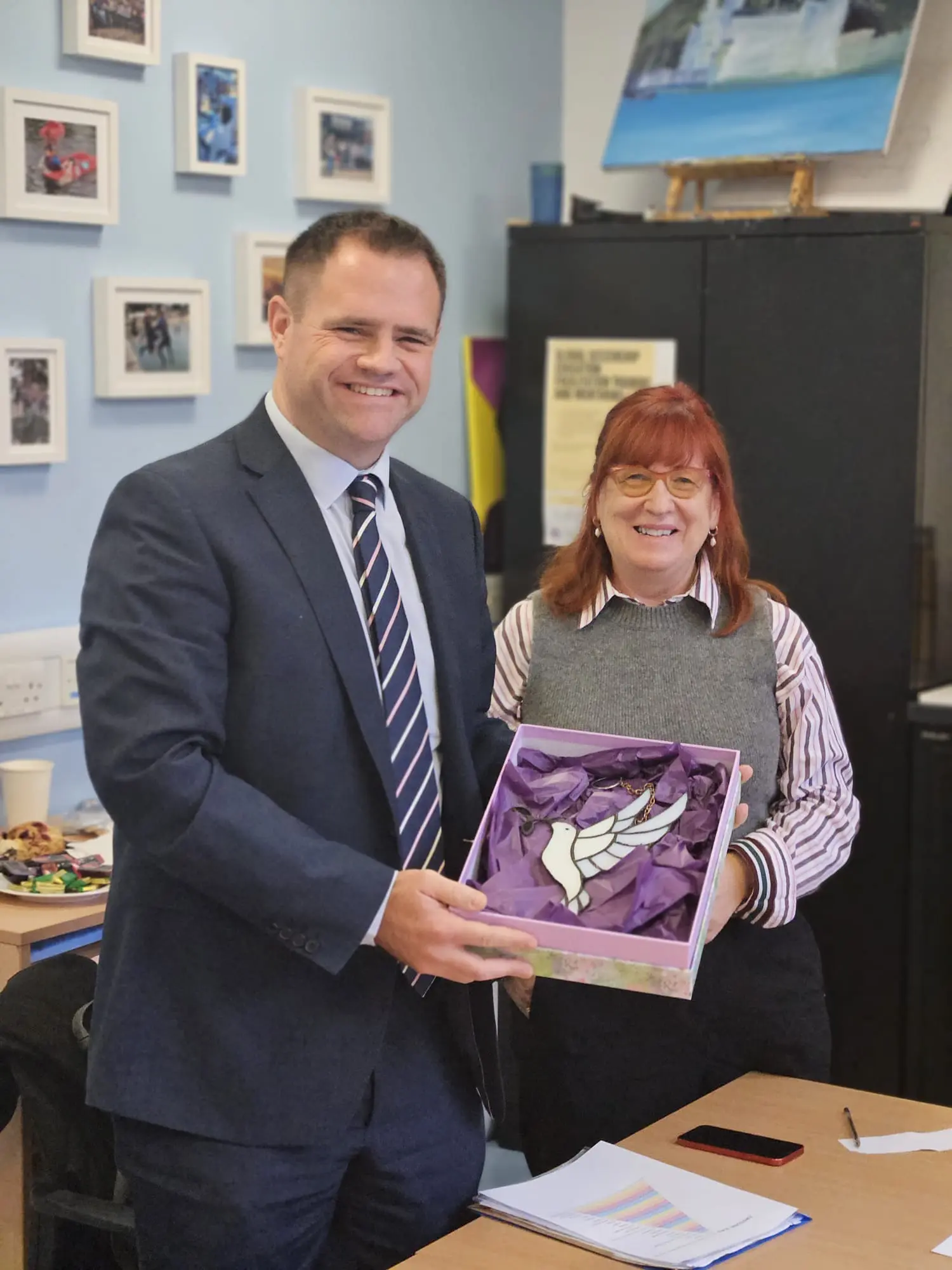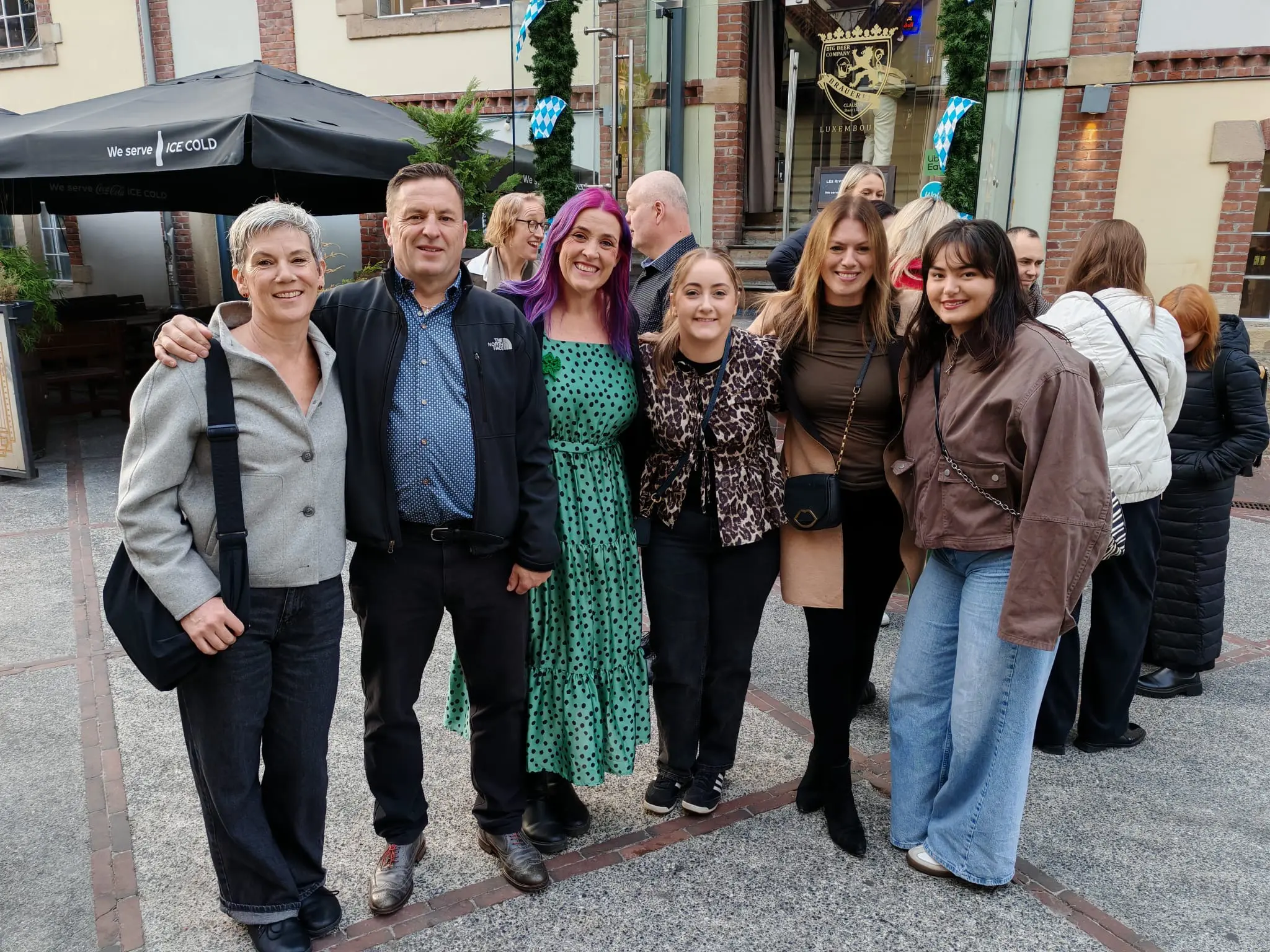
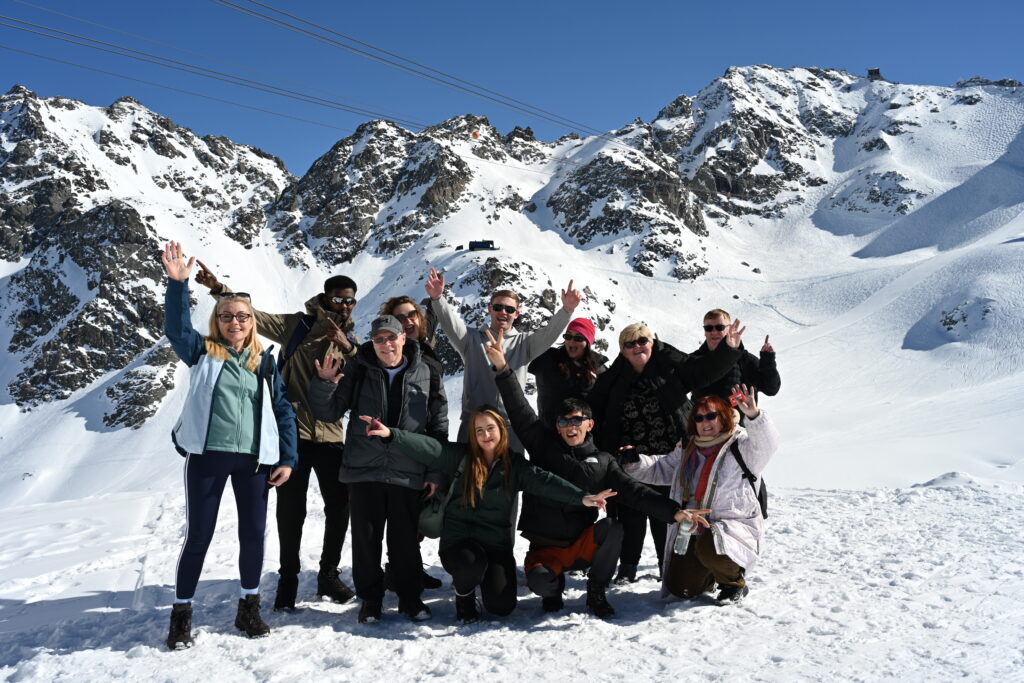
LYCS was delighted to travel to Geneva, Switzerland with a group of residents from Dublin’s North East Inner City who each have experience in local leadership and community action. Joined by our Global Citizenship Education team, the trip included visits to the United Nations (UN), All Together in Dignity (ATD) Switzerland, and Ireland’s Permanent Mission to the UN. We also had the opportunity to visit the Swiss Alps to explore the local impacts of climate change and how these connect to wider global challenges.
Our first day was spent with ATD Switzerland, an international organisation focused on solidarity in the eradication of poverty. Through our connection with ATD Ireland, we met with their Geneva office for an afternoon of shared stories and local cuisine, including raclette. The visit had a strong impact on our participants, many of whom reflected on the visible wealth of Geneva alongside the reality of poverty within the city. One participant noted that although they come from a community often affected by poverty and marginalisation, the trip changed their understanding of what poverty can look like: “You don’t have poverty like that here. People don’t die of starvation in Ireland — we have the facilities and services to stop that.”
Our group reflected on the contrast between the communities ATD works to empower and the wider standard of living in Geneva. Participants also discussed how poverty appeared less visible than in Dublin, with one noting: “On O’Connell Street there are so many people begging, but in Geneva there were no rough sleepers or beggars around.”
We also explored the similarities between LYCS and ATD’s work, particularly around empowering communities and addressing socio-economic disadvantage among both settled and migrant communities.
Our second day brought us into the Swiss Alps. We had the opportunity to meet Daniel Maselli, a Swiss sustainability advocate and biologist, who guided us through an onsite workshop on the local environment, sustainable farming, and the effects of climate change in the region. After travelling by train and cable car to Mont Fort peak, we learned about glacial retreat and its impact on agriculture, infrastructure, and local communities. Daniel explained that reduced glacial runoff affects high-yield farming areas, while thawing permafrost increases the risk of avalanches and weakens mountain structures that once relied on frozen ground for stability. The experience reinforced the importance of global cooperation and sustainability in the fight against the climate crisis, both in Switzerland and in Ireland.
Our final day was spent at the United Nations and the Irish Permanent Mission to the UN (PMUN). Before travelling, our group developed four key questions to guide our learning:
How do the UN and the Irish PMUN maintain neutrality?
How does the UN interact with the EU?
How effective is the UN?
What is the future relationship between the USA and the UN?
We had a chance to discuss these topics on our tour of the UN, exploring the ways in which it has evolved over the years to keep up with a rapidly changing world. One thing has stayed the same: it remains the one place on Earth where almost all of the world’s nations can gather together, discuss ongoing issues, and try to find shared solutions that benefit all of humanity. Our discussions focused heavily on neutrality and power within the UN system with participants questioning whether true neutrality is possible when permanent members hold the power to veto decisions. Some reflected that neutrality can sometimes result in alignment with oppressive systems or inaction in the face of injustice. Participants also reflected on the limitations of UN peacekeeping missions, particularly when operations depend on the consent of all parties involved.
Our participants voiced concern around the future of the relationship between the USA and the UN, with one participant asking “Doesn’t Trump eradicate the point of the United Nations if he just does whatever he wants?”. Our guide explained that although the USA can be slow to pay its UN contributions, it continues to do so to maintain influence within the organisation.
Being present during the 61st Session of the Human Rights Council was a once-in-a-lifetime experience. The atmosphere within the assembly hall was both sombre and energetic as diplomats and delegates moved between consultations and discussions. Topics being addressed during the session included Roma and Traveller rights, the protection of refugee rights, and the promotion of human rights through the UN Sustainable Development Goals.
Following our UN visit, we travelled to the Irish PMUN for a presentation and knowledge-sharing session with Máirtín Cronin, Head of Trade, and Brian O’Brien, Deputy Ambassador of Ireland to the UN. Ireland’s Permanent Mission in Geneva represents Ireland across areas including global health, trade, humanitarian action, disarmament, digital technology, and human rights.
The session highlighted the connection between LYCS’ local Global Citizenship Education work in Dublin’s NEIC and the wider global issues being addressed through international cooperation. Participants were particularly interested in Ireland’s role on the global stage and how Irish citizens are represented internationally. The experience deepened our understanding of how local action connects with global systems and reinforced the importance of active citizenship at every level, with one participant reflecting: “I found it interesting how Ireland trades with the rest of the world and the European Union, and how they cooperate with other countries in terms of deals, transactions, goods, and services.”
Although we learned a huge amount from the trip, we also left with many more questions. We look forward to bringing these learnings into future programmes and continuing our efforts to promote active citizenship locally and globally. A huge thank you to our incredible LYCS GCE learners who shared this journey with us. We are excited to carry these experiences forward as we continue taking action towards a better world.